
The curious case of sparkling waves: Green Noctiluca bloom in Puducherry
Manasvi D Dathathreya, Afreen Hussain, Arulmohan Rathinasamy, A Sakthivel, Punit Dhandhania
Kuddle Life Foundation, 29, Montorsier St, White Town, Puducherry, 605001.
Introduction
An invasive species is one that causes ecological or economic harm in an environment where it is not native. These species are often introduced unintentionally through human activities, such as the release of aquaculture species or the discharge of ballast water from oceangoing ships (Simberloff, 2010). One such invasive species is Carijoa riisei (Octocorallia: Cnidaria), a soft coral commonly known as the snowflake coral (Fig.1). The native range of C. riisei has been a subject of debate in the scientific literature. While some studies suggest that the species is native to the Indo-Pacific (Kahng, 2006), others argue that it originated in the Western Atlantic, particularly the Caribbean region ( Raghunathan et al. 2013). This discrepancy may arise from differences in historical records, genetic evidence, or the species’ long-established presence in the Indo-Pacific, which could lead to its misclassification as native. For the purposes of this study, the view of the Western Atlantic origin will be considered, as it is more widely supported in the literature, though the possibility of its long-term presence in the Indo-Pacific cannot be entirely dismissed. In the Indo-Pacific region, it poses significant threats to marine ecosystems. This species is known for its ability to colonize a variety of substrates, including natural rocks, shipwrecks, and artificial reefs (Galván-Villa et al., 2023). It has been observed to specially prefer man-made objects such as sunken ships or artificial reefs but the explanation given for this does not rely on specific scientific behaviour and data but leans more towards the general characteristics of an invasive species; Shipwrecks, especially deep ones, often have fewer native corals and algae competing for space, giving C. riisei an advantage, it is a rapidly growing species hence, does not allow for much competition.
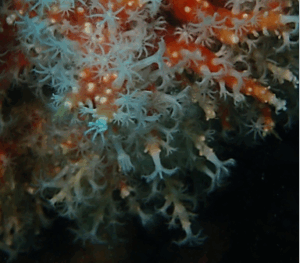
Figure 1: C. riissei from an Artificial Reef of Tamil Nadu-Pondicherry bioregion.
PC: Dr Daniella Munari
An artificial reef (AR) is a submerged structure deliberately placed on the seabed to replicate the functions of a natural reef, designed to enhance marine biodiversity and support fisheries, play a crucial role in the Indian subcontinent. It serves as a part of the natural ecosystem. (Jha et al., 2022). They are increasingly being used to rehabilitate degraded coastal ecosystems and provide economic opportunities for local communities through tourism and fisheries. The rapid growth and competitive nature of the C. riisei allow it to outcompete native species for space and resources, leading to reduced biodiversity and altered ecosystem dynamics at artificial reefs (Kahng, 2006). This paper aims to study the ecological and socio-economic impact that C. riisei has on the artificial reefs deployed by various bodies in the Indian subcontinent with a focus on understanding its spread, global presence, competitive interactions with native species and implications for reef management and conservation.
Colombia
C. riisei has been identified as an invasive species in the Pacific region for almost 40 years. However, it has aggressively overgrown native octocoral species in some rocky-coral littoral zones in the Colombian Tropical Eastern Pacific (TEP). C. riisei was reported for the first time in 2010 (Gutiérrez, 2010) and its record of occurrences is increasing due to the increase in biological surveys in the region since it has been detected in coral areas of the Gorgona and Malpelo islands, and also in Cabo Corrientes, where they have shown that it is causing mass mortality of native octocorals (Molina-Triana, 2022). While C. riisei undoubtedly present in these reef systems for at least 15 years, its competitive overgrowth on other octocorals has only recently been documented. Sea fans, which are typically overgrown by C. riisei may also be more susceptible or at least, immunocompromised to fungal diseases and mortality. In Rocata, schools of Cortez angelfish, Holocanthus passer, were also observed feeding heavily on C. riisei but its populations there appeared as healthy and abundant as populations where the fish were absent (Sánchez, 2014).
Hawaii
Of the 287 non-native marine invertebrates documented in Hawaii as of October 2023, C. riisei is the single most invasive species. Its rapid growth rate, vegetative reproduction, and unique colony structure allow it to achieve high population densities and overgrow slower growing, low-lying native benthic fauna. Sexual maturity is attained early, reproductive capacity is high, and multiple broods are produced throughout the breeding season—factors that all contribute to rapid population growth and localized spread. C. riisei also displays high resistance to physical disturbance and adaptability to various ecological circumstances, facilitating its successful colonization and competition with indigenous species in different habitats. It is only loosely restricted by food, space, competition, or predation in Hawaii which leads to low mortality rates and the widespread evolution of dominant species over native established marine communities. However, its distribution is constrained by light exposure, restricting it to shaded substrates in shallow waters, and by the seasonal thermocline, which limits its depth range (Kahng, 2006).
India
Native to the Western Indian Ocean, it was first reported in Indian waters in early 2000, and has since been recorded in several regions including Andaman and Nicobar Islands, Lakshadweep, Kerala, Tamil Nadu, Goa and Gujarat. These invasions signal that global human pressures and climate change will enhance and facilitate the introduction, establishment, and expansion of alien species into previously uninvaded environments (Nisin, 2023). In India, rising sea temperatures (>1.5°C since 1980) (Warming trends are widespread) since elevate sea temperatures has covered expansive areas since 1980, this has expanded Carijoa riisei’s appropriate reaches and that it has turned into a viable choice for augmentation in Gujarat and Odisha too, where the waters presently favor its overflowing (IMD Ocean Reports, 2023). Concurrently, intensified cyclones—linked to climate change—are damaging native reefs and creating barren substrates ripe for colonization (NCESS Kerala Study, 2022). These dynamics compound existing pressures, as seen in Lakshadweep, where C. riisei overgrowth has reduced artisanal catch diversity by 15–20%, directly threatening small-scale fisheries (CMFRI, 2022). Together, climate change and invasive spread are destabilizing both ecosystems and livelihoods.
Ecological impacts
Mono-specific aggregations of C. riisei have a lateral expansion rate ranging from 0 to 1.3 cm per month. For example, time-series observations at Shark’s Cove, Hawaii, have shown that C. riisei can overgrow, and subsequently kill surf oysters and solitary cup corals. In surf oysters, for example, C. riisei grows on the oyster’s shell and surrounding substrate, limiting the oyster’s access to the water column and eventually killing it. As a result, the top half of the oyster shell often tears off. Fragmented bivalve shells and cup coral skeletons are regularly found beneath dense aggregations of C. riisei, indicative of the competitive advantage of this species. Moreover, although the ecological impact of C. riisei in shallow coral reef environments seems to be minimal due to the low availability of suitable habitat, its biomass may become dominant in localized areas under optimal conditions, dramatically altering community structure (Kahng, 2006). At depths between 80 and105 m, C. riisei has been shown to differentially affect reproductively mature black coral colonies. The radiation of C. riisei overgrowth on black corals and nearby substrates seems to be limited by environmental conditions, such as high irradiance that occurs in shallow waters and cooler temperatures that exist in deep waters. evidence suggests other epifauna facilitate settlement of C. riisei on black corals. Once attached to the coral, the species spreads vegetatively until it ultimately smothers the host coral. Interestingly, the success of C. riisei invasion does not appear to be directly linked to anthropogenic disturbances, indicating that its spread may be driven primarily by its biological characteristics and environmental adaptability (Kahng et al., 2005).
Socio-economic impacts
The black coral fishery targeting primarily members of the Antipathes genus (A. dichotoma and A. grandis) in the Hawaiian Islands had an estimated value of $30 million a year before its ban (Grigg et al., 2004). Yet the invasive C. riisei species has proliferated within its habitats at black coral sites along the coastal of Maui leading to increased harvesting pressure that has reduced black coral biomass by nearly 25% (Grigg et al., 2004). Black corals are commercially harvested for use in jewelry, and their conservation is therefore important to the local economy. The black corals are not only ecologically threatened due to overgrowth, but economically compromised due to the challenges of a jewelry industry economically reliant on this fishery. In the Andaman and Nicobar Islands, where tourism is a major economic driver, the degradation of these reefs by C. riisei risks deterring tourists, curtailing income for locals (Figure 7). As reef integrity is lost, natural barriers against storms and erosion can weaken, leaving coastal communities vulnerable to climate-related hazards; damage to living communities can, in turn, damage the local economy and livelihoods (Teena et al., 2024) As the coral reef ecosystem supports 25 % of all marine biodiversity and Provides 10% of global fishery yields which is particularly endangered by the overgrowth of fish populations caused by C. riisei (Raghunathan et al., 2013); many communities are heavily dependent on reef ecosystems for food and income. These socio-economic impacts highlight the need for effective management strategies to mitigate the effects of C. riisei and protect the livelihoods of coastal communities.
An artificial reef in Pondicherry
A striking example of C. riisei’s invasive capacity has been documented at the Kuddle Life Foundation’s (KLF) Artificial Reef, deployed just two years ago off the coast of Tamil Nadu. Despite its recent installation, routine biodiversity surveys have been conducted and this has revealed established colonies of snowflake coral already overgrowing in the concrete modules. C. riisei has been noticed and observed as early as eight months after deployment of the reef which further highlights the level of invasion.
Fig 3: Dark Field micrographs of Noctiluca scintillans as observed under Imager 2.0 Zeiss Fluorescent microscope.
- scintillans is a non-motile, buoyant dinoflagellate that can grow up to 0.2 – 2 mm in diameter, though typically about 0.5 mm (Horner 2002) and can exist in green or red form. They maintain their buoyancy by regulating the ions concentration in the vacuole (Kahn and Swift, 1978) The red N. scintillans is a heterotroph and responsible for Harmful algal blooms, causing the red tides (Asefi et al. 2023). The green form as observed here has a photosynthetic symbiont inside called Pedinomonas noctiluca which gives the green color. The green form is mainly autotroph or even photoautotrophic depending on the abundance of photosynthetic symbionts (Piontkovski et al. 2021).
Let’s take a closer look at the phenomenon of Bioluminescence!
Bioluminescence is the natural production of light by living organisms. This light results from a chemical reaction that usually involves a light-producing molecule called luciferin and an enzyme known as luciferase (Widder 2010) (Figure 4). First described by Aristotle (384-322 BCE), who recognized the self-luminosity of organisms without the production of heat (Schramm & Weiß, 2024). Bioluminescence is found in a wide range of organisms, including deep-sea fish, jellyfish, plankton, certain fungi, and insects like fireflies (Herring P J & Widder, 2001).
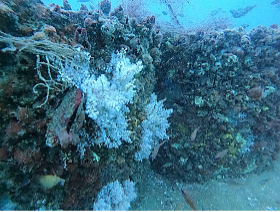
Figure 2: C. riisei infestation on KLF’s Artificial Reef in Tamil Nadu-Puducherry bioregion.
PC: Dr Afreen Hussain
Management and control
- riisei’s broad depth range (0–125 m) makes removal economically challenging, since nearly all methods run into issues in deep-water environments. Localized removal will be used to restore critical areas of habitat of concern; however, this will be a continuous and long-term maintenance effort. Since chemical agents are undesirable when invasive species such as C. riisei are well established, biological control is often viewed as a management strategy. Natural Enemies: This method allows for the introduction of natural enemies to assist with the control of the invasive species. One of the proposed advantages of this approach is that natural enemies are, in most cases, self-dispersing and self-sustainable, which renders biological control more economical than chemical and mechanical strategies (Van Lenteren et al., 2003). However, importing non-native biological control agents includes significant risks, such as potential non-target effects that can alter local ecosystems (Lesica & Hanna, 2004). Moreover, the introduction of these organisms is typically irreversible, necessitating an extensive vetting of both the control agent and their potential ecological effects prior to application. Such considerations will help to make the biological control strategy more effective and to minimize its potential risks (Kahng, 2006).
These challenges are particularly pertinent in India, where artificial reef (AR) deployment is being rapidly expanding. In August 2023, the Department of Fisheries announced the installation of ARs in 3,477 fishing villages, with the implementation by the Central Marine Fisheries Research Institute (CMFRI). This project saw further growth in November 2020 when the Pradhan Mantri Matsya Sampada Yojana (PMMSY) sanctioned 93 additional AR units along the Odisha coast (costing ₹290 million, US$3.5 million, 60% central funding), aimed specifically at climate resilience and the enhancement of the fishery (Kizhakudan, 2023).
Conclusion
Invasive snowflake coral is a complex threat to marine ecosystems in the Indian subcontinent, with a plethora of documented impacts from biodiversity loss to disruptions to fisheries and tourism, which are critical economic sectors. In developed locations such as the Andaman Islands and Kerala, its explosive colonization of ARs is alarming as India is taking major steps toward large-scale AR deployments under the Pradhan Mantri Matsya Sampada Yojana (PMMSY) scheme. A total of 3,477 ARs are proposed across five fishing villages with the release of ₹290 million earmarked for Odisha (the measures would be ineffective if C. riisei spreads unchecked as it would not only deteriorate reef functionality but would also undermine the quality of fish habitat, directly compromising fish stocks our fishermen catch). Current management strategies, including localized removal and biological control, are limited by the species’ wide depths range and the risks of non-target effects. However, the subsequent actions can play a role in addressing from these challenges: Preventive Surveillance: C. riisei surfacing sites’ surveillance in AR deployment sites — with assistance from CMFRI, Community Empowerment: Development & training of domestic fishing communities to be able to identify and report to the authorities before an invasion becomes serious, Targeted Research: Development & prioritization of targeted research on associations between C. riisei, the Indian AR designs and India’s endemic species.
The time to act is running out. As such, by mainstreaming invasive species management into India’s AR policy framework, stakeholders can work to protect both ecological resilience and the livelihoods of coastal communities. This study shows that the battle against C. riisei is more than ecological — it’s inherently linked to sustainable development.
Acknowledgements
The authors would like to thank the scientific and diving teams of Kuddle Life Foundation for the field surveys and logistical support.
References
- Simberloff, D. (2010). Invasive species. Conservation biology for all, 1, 131-152.
- Raghunathan, C., Venkataraman, K., Satyanarayana, C., & Rajkumar, R. (2013). An invasion of snowflake coral Carijoa riisei (Duchassaing and Michelotti 1860) in Indian seas: threats to coral reef ecosystem. Ecology and conservation of tropical marine faunal communities, 381-393.
- Galván‐Villa, C. M., Tovar‐Hernández, M. A., Rodríguez‐Zaragoza, F. A., Esqueda‐González, M. D. C., Sánchez‐Rodríguez, J., & Ríos‐Jara, E. (2023). Effect of the alien octocoral Carijoa riisei on benthic fauna assemblages on natural and artificial substrates. Marine Ecology, 44(4), e12756.
- Jha, D. K., Pandey, V., Santhanakumar, J., Sathish Kumar, P., Venkatnarayanan, S., Jebakumar, J. P. P., … & Vijaya, R. (2022). Evaluation of site suitability for artificial reefs deployment in southeast coast of India using geographical information system as a management tool. Frontiers in Marine Science, 8, 817975.
- Kahng, S. E. (2006). Ecology and ecological impact of an alien octocoral, Carijoa riisei, in hawaii (Doctoral dissertation, University of Hawaii at Manoa).
- Gutiérrez, A. (2010). Impact assessment of an invasive octocoral species (carijoa riisei) in the eastern tropical Pacific. Universidad de Los Andes, Bogotá, Colombia.
- Sánchez, J. A., & Ballesteros, D. (2014). The invasive snowflake coral (Carijoa riisei) in the Tropical Eastern Pacific, Colombia. Revista de Biología Tropical, 62, 199-207.
- Molina-Triana, F., Bermudez-Rivas, C., Parada-Gutiérrez, J. L., & Castrillón, F. A. (2022). Monitoring of an invasive octocoral (Carijoa riisei) in the two main port areas of the Colombian Pacific basin. ACTA OCEANOGRAFICA DEL PACÍFICO, 4(2), 20-33.
- Nisin, K. M. N., Sreenath, & Sreeram, P. (2023). Change in habitat suitability of the invasive Snowflake coral (Carijoa riisei) during climate change: An ensemble modelling approach. In ScienceDirect (Volume 76). ScienceDirect. Retrieved February 28, 2025, from https://www.sciencedirect.com/science/article/abs/pii/S1574954123001747#preview-section-cited-by
- Kahng, S. E., & Grigg, R. W. (2005). Impact of an alien octocoral, Carijoa riisei, on black corals in Hawaii. Coral Reefs, 24, 556-562.
- Grigg, R. W. (2004). Harvesting impacts and invasion by an alien species decrease estimates of black coral yield off Maui, Hawai’i. Pacific Science, 58(1), 1-6.
- Raghunathan, C., Venkataraman, K., Satyanarayana, C., Rajkumar, R. (2013). An Invasion of Snowflake Coral Carijoa riisei (Duchassaing and Michelotti 1860) in Indian Seas: Threats to Coral Reef Ecosystem. In: Venkataraman, K., Sivaperuman, C., Raghunathan, C. (eds) Ecology and Conservation of Tropical Marine Faunal Communities. Springer, Berlin, Heidelberg. https://
- Teena Jayakumar, T. K., & Sarkar, U. K. (2024). Habitat Degradation in Coral Reef Ecosystems and Mangroves: Current Status and Management Measures. In Sustainable Management of Fish Genetic Resources (pp. 111-149). Singapore: Springer Nature Singapore.
- Lesica, P., & Hanna, D. (2004). Indirect effects of biological control on plant diversity vary across sites in Montana grasslands. Conservation Biology, 18(2), 444-454.
- Van Lenteren, J. C., Babendreier, D., Bigler, F., Burgio, G., Hokkanen, H. M. T., Kuske, S., … & Zeng, Q. Q. (2003). Environmental risk assessment of exotic natural enemies used in inundative biological control. BioControl, 48, 3-38.
- Kizhakudan, S. J., Divu, D., Sreenath, K. R., Koya, M., Edward, L., … & Remya, L. (2023). Artificial reefs-definition, history and status in India.
- Laskar, S. I. (2016). India meteorological department.
- CMFRI, K. (2023). Marine Fish Stock Status of India, 2022 (Reprint 2023).
- Balachandran, S., Joseph, S., & Sreelakshmi, M. (2024). An Evidence-Based Study of Spatiotemporal Trends and Hotspots of Sea Surge Events in Kerala, India. Regional Studies in Marine Science, 103949.
Your support matters!
Help us reach more people. Share this post with your friends!